



Bali Council in Mezam Division of Cameroon’s North-West Region is facing serious questions over governance, accountability and the management of public resources.
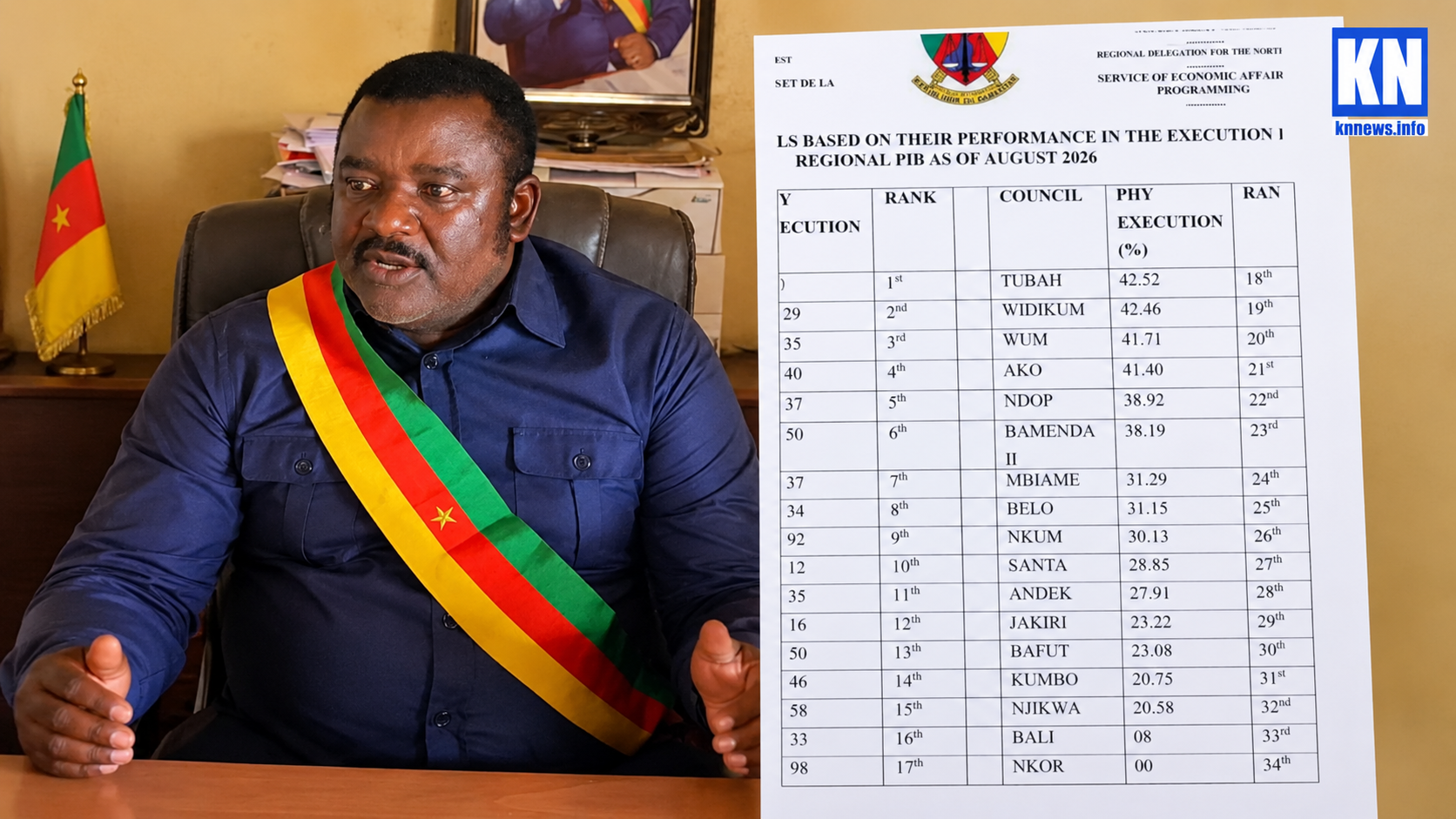
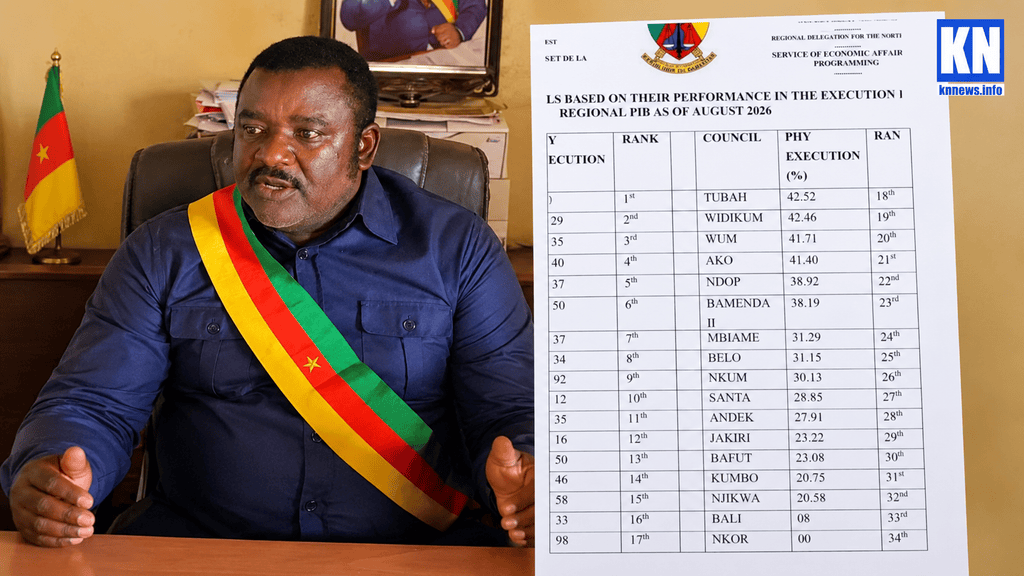
According to a recent publication by the Ministry of Economy, Planning and Regional Development (MINEPAT) on the execution of the Regional Public Investment Budget, Bali Council was ranked 33rd out of 34 councils in the North-West Region.
This means Bali Nyonga’s council was ranked second from the bottom in the region in the execution of the Regional Public Investment Budget.
The ranking raises fresh questions about the management and implementation of development projects intended to improve the living conditions of the population.
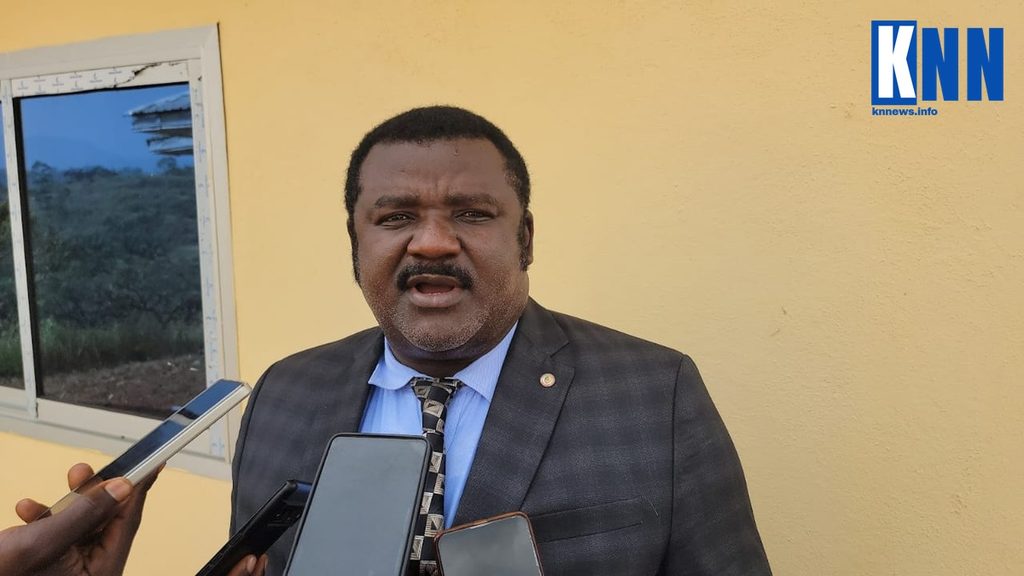
For six years, the Bali Council, under Mayor Wandum Bunga Ernest, has implemented several projects intended to alleviate the living conditions of the Bali Nyonga people. These projects, estimated at billions of CFA francs, have, according to critics, ended largely on paper rather than producing the expected results on the ground.
The concerns are not limited to project execution.
According to a 2024 report by the Office of the Public Independent Conciliator for the North-West Region, Bali Council was among the councils identified as having a deteriorating relationship with its population.
WHERE IS THE COUNCIL OVERSIGHT?
One of the most troubling questions concerns the functioning of the municipal council itself.
How can councillors effectively assess the quality of services being delivered to the population of Bali if the council is not meeting as required?
Bali Council has held no ordinary council session in 2026, according to evidence obtained for this publication.
Under Article 171(1) of Law No. 2019/024 of 24 December 2019, the Municipal Council meets in ordinary session once every quarter, with each session lasting a maximum of seven days.
As of 3 October 2026, three quarters of the year have already elapsed.
This means that, ordinarily, the Bali Council should have held:
- First-quarter session
- Second-quarter session
- Third-quarter session
with the fourth-quarter session still due.
Yet, according to the evidence available, none of these ordinary sessions has been held in 2026.
THE LAST SESSION
The last council session identified was the 2026 Budgetary Session held on 11 December 2025.
During that session, councillors met and voted the 2026 Bali Council budget at 915.5 million FCFA, balanced in revenue and expenditure.
That budget was intended to finance the council’s activities and development priorities throughout 2026.
But as of 3 October 2026, barely two months before the end of the financial year, an important question remains:
What is happening to the 915.5 million FCFA approved for the Bali Council?
How much has been spent?
What projects have been implemented?
Which projects remain unfinished?
How much money remains?
And, crucially, how have councillors been able to exercise their oversight responsibilities without the statutory ordinary council sessions?
A council session is not simply a meeting.
It is one of the principal mechanisms through which councillors scrutinise municipal management, deliberate on public expenditure, approve development programmes and hold the municipal executive accountable.
The absence of the required ordinary sessions therefore raises fundamental questions about the functioning of Bali Council and the mechanisms available to councillors to monitor the management of public resources.
WHAT DOES THIS MEAN FOR THE PEOPLE OF BALI?
The people of Bali Nyonga have a legitimate interest in knowing how their council is being managed and how public resources are being used.
They also deserve to know whether the projects approved and budgeted are actually being implemented and whether the expected benefits are reaching the population.
With Bali Council ranked 33rd out of 34 councils in the North-West Region in the execution of the Regional Public Investment Budget, and with “no ordinary council session held in 2026” according to the evidence obtained, questions about accountability can no longer be ignored.
The central issue is therefore not simply how much money has been budgeted.
It is whether that money is producing tangible results.
It is whether the council’s development programmes are being implemented.
And it is whether the elected representatives of the people are exercising the oversight responsibilities entrusted to them by law.
For many residents, the answers will determine whether the current management of Bali Council is delivering the governance and development expected from their elected officials.
The evidence raises serious questions. The people of Bali deserve clear answers.
Fabris KEHDINGA (Son of The Soil)
