



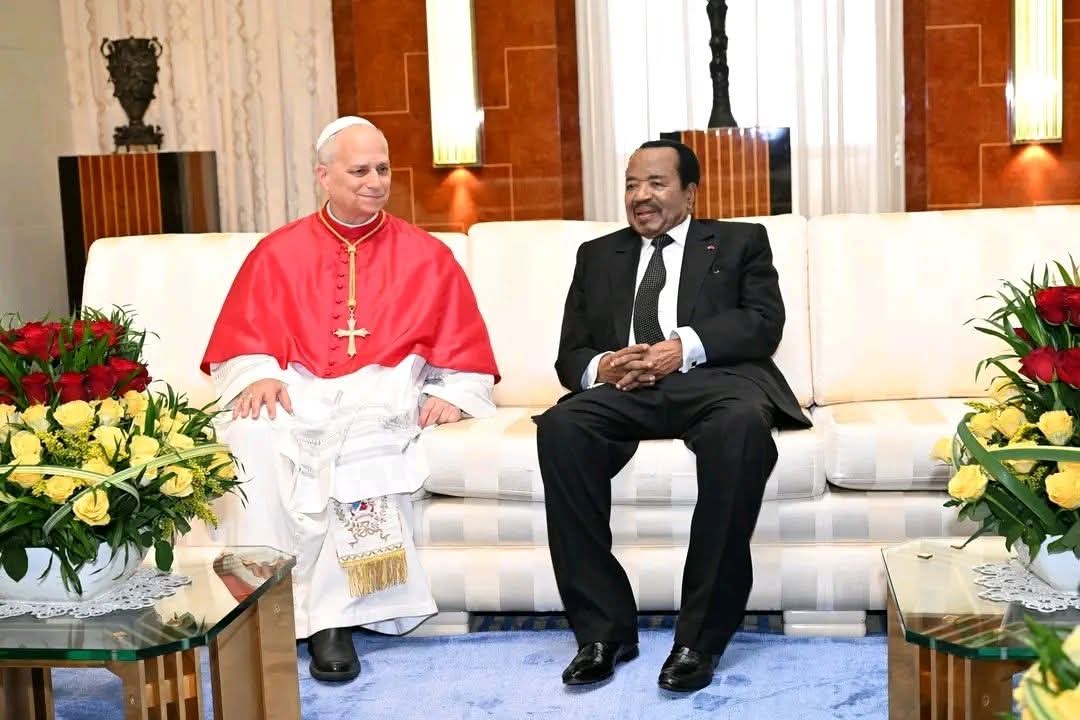
Pope Leo XIV has raised a pointed question about whether President Paul Biya and his government have truly listened to the messages delivered by successive popes who have visited Cameroon.
For years, the Cameroonian government has highlighted President Biya’s reception of multiple pontiffs as a badge of honour—an emblem of international relevance and continuity. But speaking in Yaoundé, the Pope challenged that narrative with a far more uncomfortable reflection.
Addressing state authorities, civil society, and members of the diplomatic corps, the pontiff invoked the legacy of his predecessors, Pope John Paul II and Pope Benedict XVI. Both leaders, he noted, brought clear messages centered on reconciliation, justice, peace, and moral responsibility in governance.Then came the defining moment.“Where are we now?” Pope Leo XIV asked—a question that resonated less as a reflection and more as a subtle indictment.The implication was unmistakable.
If those earlier messages had been genuinely embraced, Cameroon might not still be grappling with deep national divisions, prolonged conflict, and recurring concerns over governance and accountability.By questioning what tangible outcomes those historic visits have produced, and what remains undone, the Pope effectively called on the political establishment to confront decades of unfulfilled promises.In a setting often reserved for ceremony and diplomatic courtesy, Pope Leo XIV chose instead to challenge the narrative.
Rather than celebrating history, he interrogated it—transforming a symbolic occasion into a moment of quiet but profound reckoning.
Fabris KEHDINGA in Yaounde
