



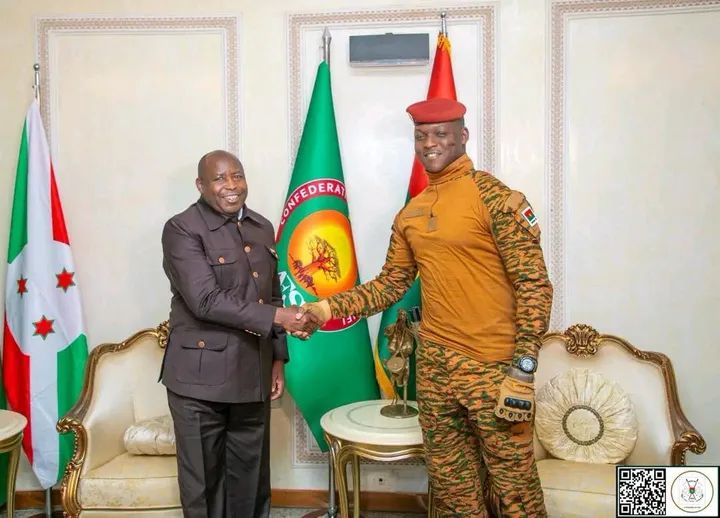
The Chairperson of the African Union and President of Burundi, Évariste Ndayishimiye, is on a working visit to Burkina Faso, in a move that underscores growing attention on relations between continental and regional blocs in the Sahel.
According to the Burkinabè presidency, the visit is aimed at strengthening cooperation between the African Union and the Confederation of Sahel States, a grouping that has increasingly asserted its position in regional security and political affairs.
A Strategic Visit Beyond Bilateral Ties
Although officially described as a working visit, early signals from Ouagadougou suggest that the agenda goes beyond traditional bilateral engagement between Burkina Faso and Burundi. Instead, the focus appears to be on recalibrating relations between the African Union and the AES bloc.
This comes at a time when the Sahel region is undergoing significant geopolitical shifts, with member states of the AES redefining their partnerships and regional alignments.
Development and Visibility
As part of his stay, President Évariste Ndayishimiye is expected to visit key socio-economic infrastructure projects across Burkina Faso. The tour is intended to showcase development efforts in the landlocked country while also emphasizing the importance of economic resilience and regional cooperation.
Awaiting AU’s Official Position
Despite the significance of the visit, the African Union has not yet released an official statement outlining its expectations or objectives. This silence has left room for interpretation, particularly regarding how the continental body intends to engage with the AES moving forward.
A Defining Moment for AU–Sahel Relations?
Analysts say the visit could mark an important step toward redefining engagement between the African Union and emerging regional alliances such as the AES. Whether it leads to deeper cooperation or highlights existing tensions remains to be seen.For now, all eyes remain on Ouagadougou as discussions unfold—potentially shaping the future of multilateral relations in one of Africa’s most strategically sensitive regions.
By Fabris KEHDINGA
